Working together on the agriculture of the future.
Four key tasks
Fascinating covers four topics:
1. Healthy and balanced diet
2. Sustainable production of nutritional crops
3. Energy-effi ciency and sustainable processing
4. Utilisation of residual flows
“By working together on these four tasks, we aim to make the agriculture sector of the future a reality within ten years. That is the dot on the horizon,” Marieke points out. So ambitions are high. “It started regionally, in Groningen, but projects are now also running on a national level, and Fascinating has been given plenty of attention. Eventually, we hope to continue this internationally. All over the world, we clearly benefi t from a future-proof agricultural and food system.”
Avebe as one of the founders
Avebe is one of Fascinating’s founders. “Of course, we have been innovating with potato protein for healthy food for decades. Producing and consuming more plant protein – and less animal protein – is important for the climate and our health. This makes it an essential part of the future agricultural sector and an important pillar within the Fascinating programme. This fi ts very well with our mission,” Marieke explains. “We believe it is important to work for the future of agriculture and are happy to join forces with other parties.”
The power of partnership
“Together, you achieve more than alone,” she continues. “What is unique about this programme is that we work intensively with many parties and share knowledge. Consider the ‘Promising Protein Crops’ project, in which we look into which protein crop best suits which soil type and how healthy those crops are for the human body. Another great example is a project where we are collaborating with Cosun. They get protein from the sugar beet leaf, and we get it from the potato. It pays to join forces and look at processes and areas for improvement together. We are also working with the UMCG and the RUG on a study of anti-nutritional substances that we can extract from potatoes, which are then used as inhibitors against infl ammation. These substances protect the potato plant from diseases, and these properties can also be used to inhibit infl ammation. Here, we investigate how potato protein can counteract infl ammations such as baby rashes or intestinal infections (such as Crohn’s disease). Potato protein can play an important role, not only in food but also in health. In short, we look at the complete picture. And that is also what makes projects like this so interesting.”
Proudly moving into the future
When asked why Marieke thinks the Fascinating programme is so important and how she envisions the future of agriculture, she is clear. “We all know something has to change. Social and political pressure has increased enormously. For that reason, we must continue to work together as a chain and off er future prospects for the entire sector.” But there should also be room for pride, says Marieke. “We sometimes forget what we have already achieved as a relatively small country. We are at the forefront of innovation in the agri-food sector, and great things are happening. We as a sector have reason to be really proud of that! And we can also put out that message more.”
Generational change within KPW
Every site of Royal Avebe has its own Human Resources challenges. This includes the Avebe Kartoffelstärkefabrik Prignitz/Wendland (KPW) sites in Germany. The relatively high average age of the staff creates capacity challenges for the future. Manuela Kruse, Recruiter at KPW, is working hard with her colleagues on a generational change at the two locations. She talks about the personnel developments at the sites in Dallmin and Lüchow.
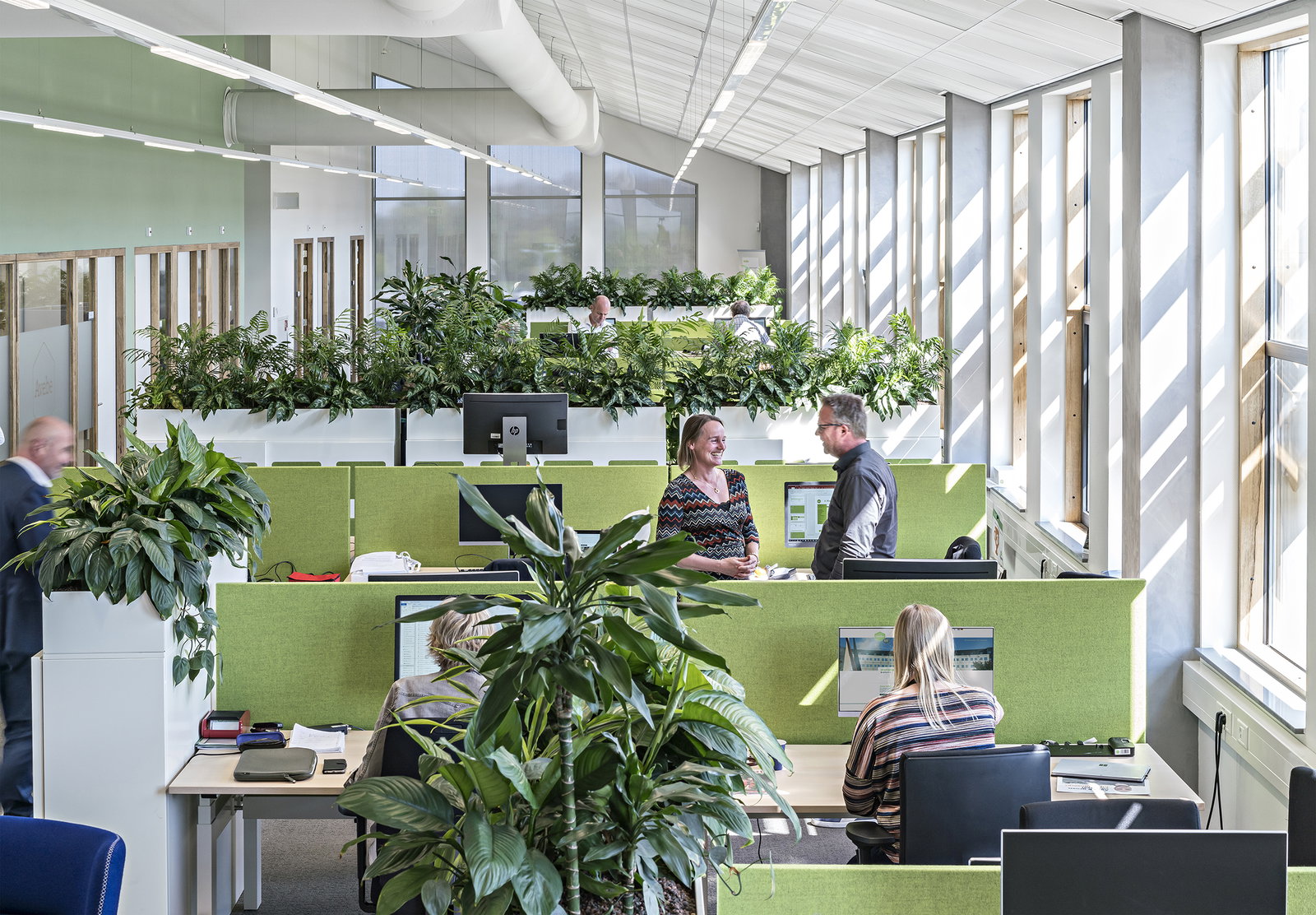
“There are currently almost 140 people working at KPW,” Manuela begins her story. “Based on the current data, 31 of them will retire in the next ten years. The need for young workers will therefore only increase in the near future. I see this as our greatest challenge. But making and keeping our employees fit and healthy is also a challenge,” she explains. “Especially given the further raising of the retirement age. The project “SPP – Strategic Personnel Planning” has an important role here. For example, we offer training to our employees for several functions within production. Knowledge transfer between colleagues is also central. The average length of service at KPW is currently 17 years. The highest number of years of service within KPW currently stands at 46 years. The knowledge gained over the years is invaluable. To prevent the loss of knowledge and experience, we work with SPP to ensure a permanent transfer of knowledge.”
Generational change
“We see a clear generational change within KPW. Looking back over the past eleven years, KPW has moved from a generation of baby boomers that was very well represented at the time to an
employee group that is much more multi-generational.” And with the change of generations come different needs. “The younger generations attach much more value to the total package of employment conditions. This means that there are higher expectations regarding flexible working, work-life balance, digitalisation and other benefits such as health at work. Shift work and weekend shifts are losing popularity with young applicants, as this does not fit in with their lifestyle.”
Recruiting new employees
Success in recruiting new employees is quite variable, explains Manuela. “It depends very much on the position in question. We use the career portal on our website, regional networks and online job boards. Sometimes we still choose the old-fashioned way by placing a vacancy in regional newspapers or using headhunters. Recently, we have recruited good employees who used to work for us as temporary workers. The internal campaign ‘colleague recruits colleague’, in which we gave away recruitment bonuses, was also successful.”
Attractive employer
Manuela has a clear vision of how Avebe can be an attractive employer for young generations. “It is important to develop a corporate culture in which cooperation and trust are central, and there is room for employee input. Creating a good working atmosphere, offering a variety of tasks and focusing on the continuous transfer of knowledge and experience from long-serving employees to new employees would, I believe, be good steps towards increasing our attractiveness as an employer. We also need to take a close look at our current working hours models and, within our possibilities as a company, optimise the desired flexibility of working hours, work-life balance and our ageing employee group.”
Future
Manuela: “Our challenge for the future is to fill crucial key positions with welltrained professionals promptly and in line with job requirements. It is about combining the different generations working for us into a team where youth and competence come together. And I’m happy to work on that!”