Energy-savings pays off more than ever
Royal Avebe is reducing its environmental impact through strategic sustainability programmes. Erik Koops is the programme manager for the CO2 and energy reduction programme. He sees opportunities in energy-saving and electrification of processes.
Energy Savings
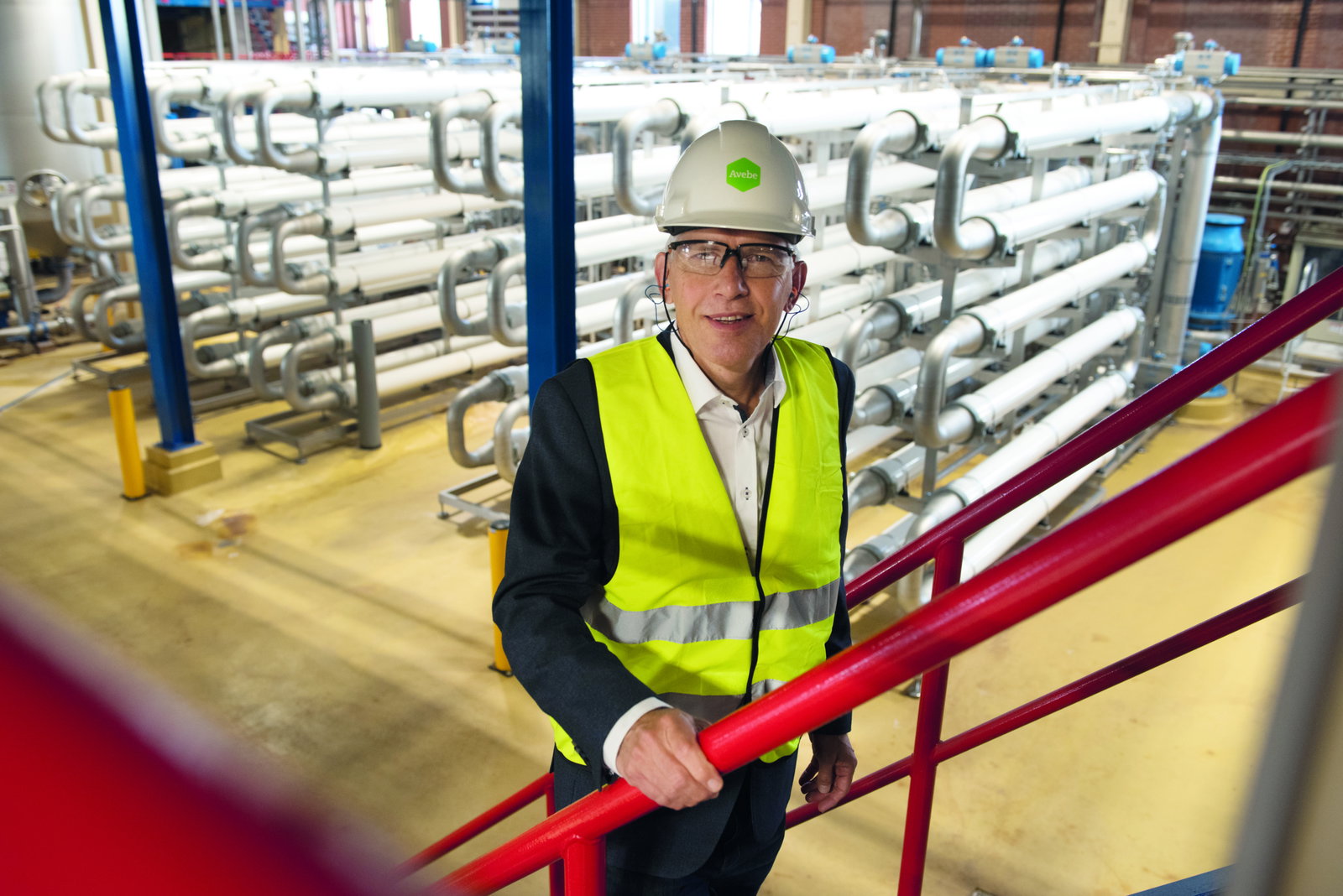
According to Koops, the approach takesplace via three fronts: “Firstly, we invest inrenewing processes, especially those most energy-intensive. Secondly, we optimise existing processes. Finally, there is what we describe as “good housekeeping”. This also stimulates awareness of further energy-saving opportunities.” As an example of investments that yield strong CO2 reductions, Koops mentions the application of membrane technology. If we first concentrate the product using membranes, much less energy is needed for heating, drying and evaporation.
Examples include the Ducam project in Ter Apelkanaal, ultrafiltration in the new protein factory in Dallmin and membrane installations at Solanic.
“By 1 August 2023, we want to emit 12 per cent less CO2. By this Avebe means absolutely and per tonne of product produced. Without a CO2 and energy reduction programme, Avebe’s carbon emissions would go up because we make more and more high-value products whose production requires more energy. This means that we need to save 20% of energy to achieve a net 12%. That is a tough target, but we are on course to meet it, and plans are already being made for further CO2 reduction by 2030.” – Erik Koops
Elektrification
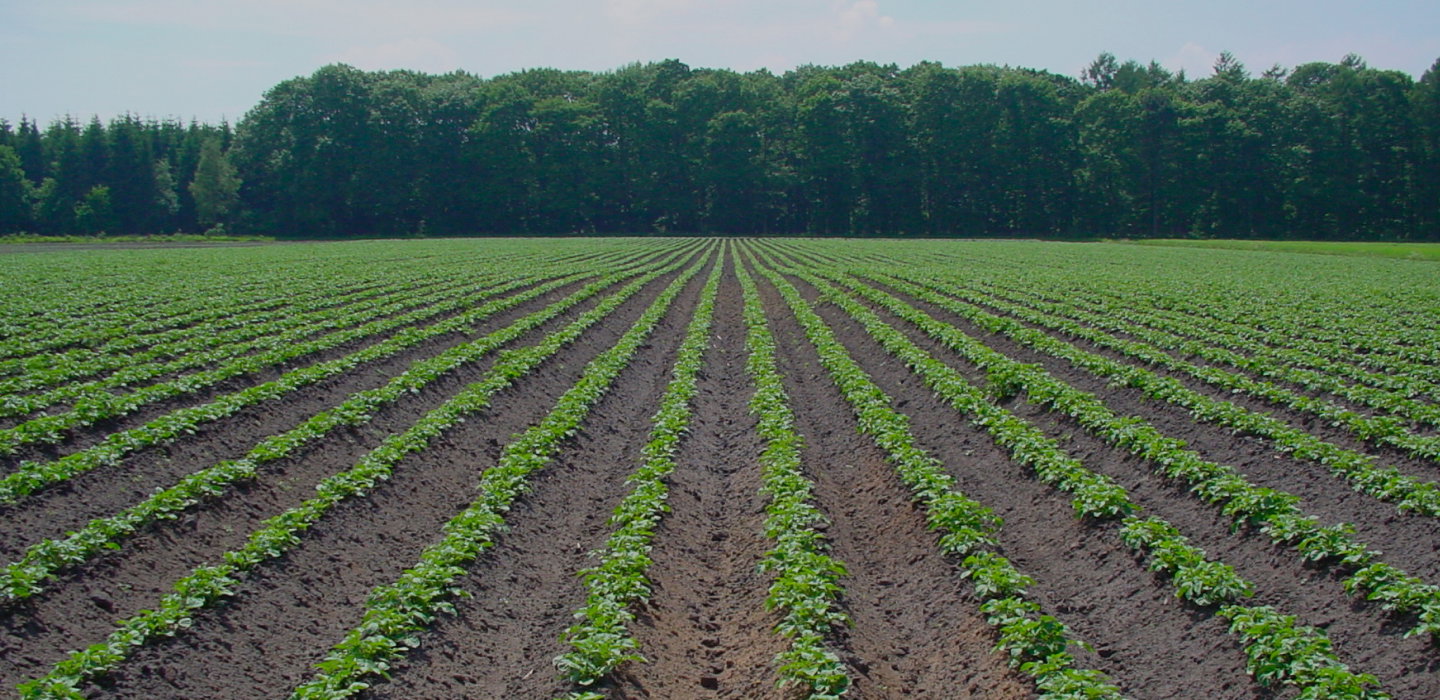
Apart from saving energy, carbon emissions can also be reduced by switching from natural gas to electricity. “Electricity is much more expensive on average than natural gas, but the price of electricity varies widely, depending on supply and demand. With new electric steam boilers, Avebe can make steam 20 per cent of the time with electricity instead of natural gas. The green electricity comes largely from our own solar farms in Ter Apelkanaal and Gasselternijveen.
Avebe received the SDE++ subsidy for three e-boilers, two of which will be installed in 2022. We are leading the way in the Netherlands in this respect. An e-boiler was already in use last year at Stadex in Sweden. Because electricity is comparatively cheaper there, it was possible to switch entirely to green electricity. This makes Stadex the first carbon-neutral Avebe plant.”
Internal CO2 price:
€ 100 per tonne Large companies have to pay for their carbon emissions. The European market price for CO2 is now around € 80 per tonne. To stimulate investments in energy saving, Avebe uses an internal CO2 price of € 100 per tonne. This applies to saving on fossil fuels (especially natural gas) at Avebe.
Protamyl® factory in Dallmin
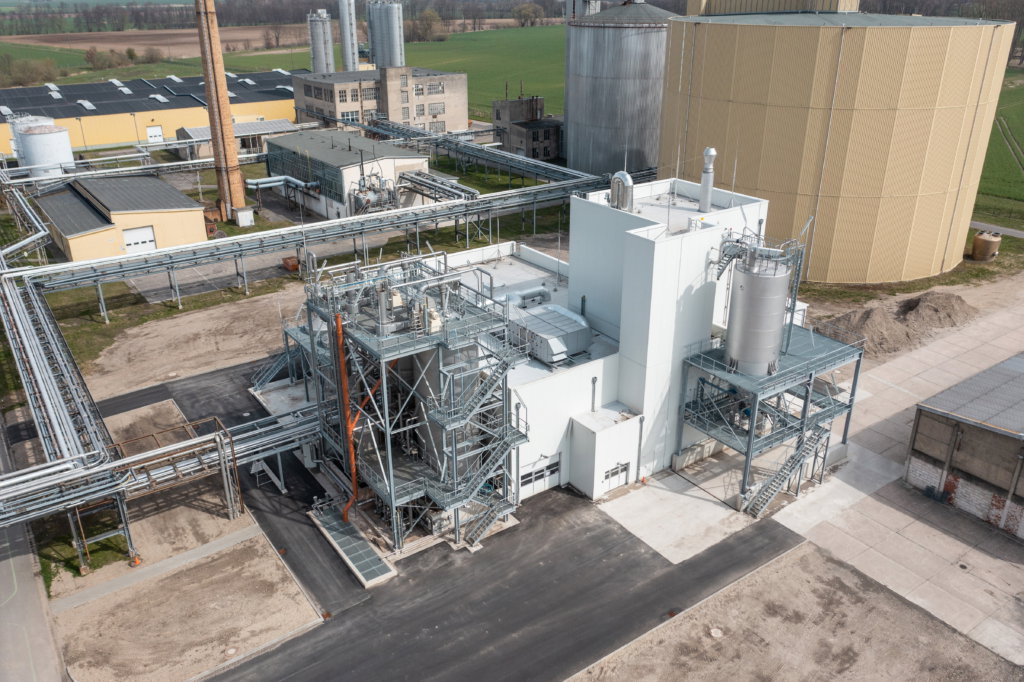
The new Protamyl™ factory in Dallmin went into operation last autumn. Peter Minow, Managing Director of Royal Avebe Kartoffelstärkefabrik Prignitz/ Wendland GmbH, is happy to explain some of the elements.
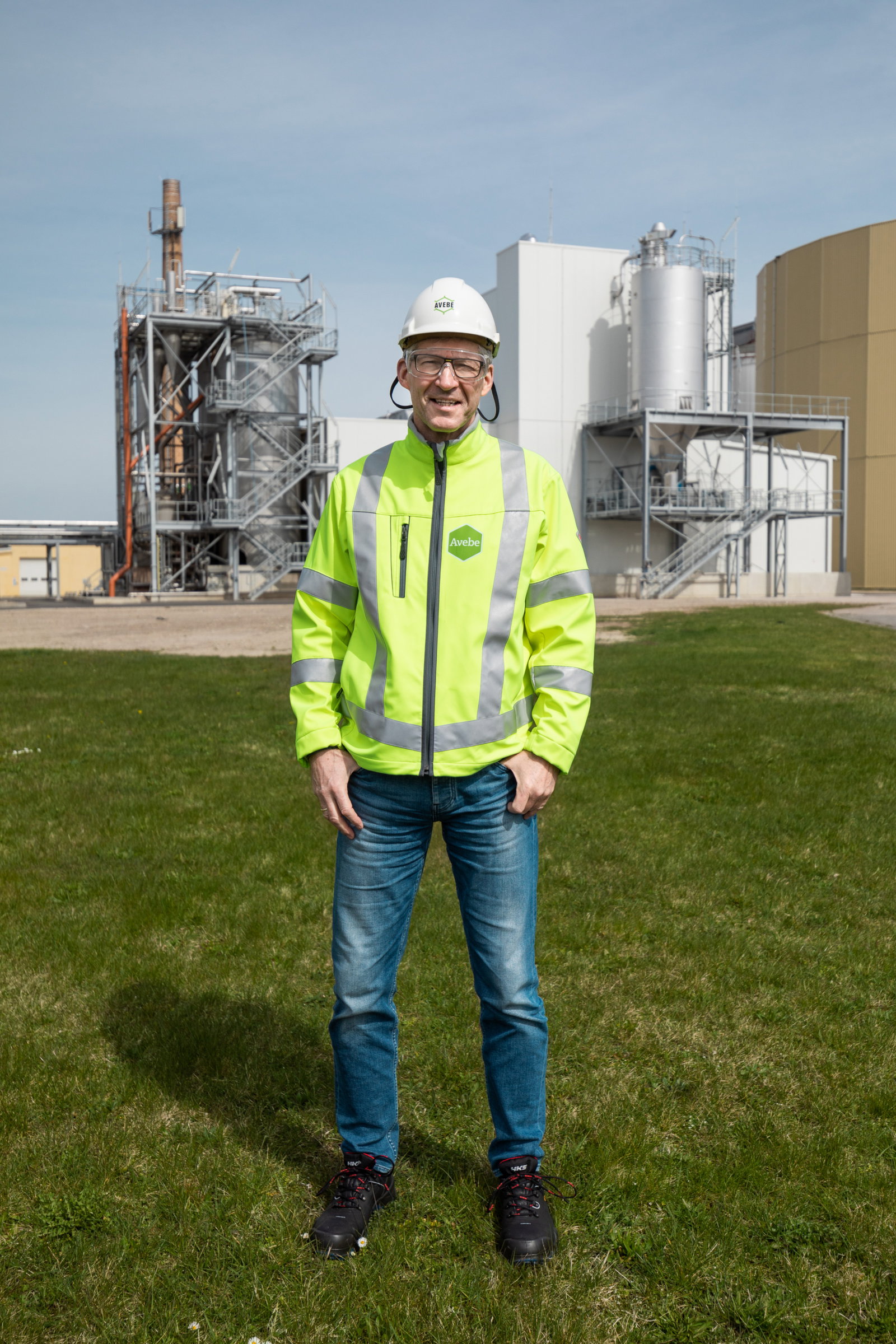
“Since November 2021, we have been producing about 800 kg of protein per hour in the protein factory. To save energy, the potato fruit water is further concentrated in an ultrafiltration plant before the protein extraction takes place.”
“The foam from the potato fruit water is removed mechanically in tanks. This skimming process ensures that the other production processes in the protein factory remain stable.”
“After skimming, the potato juice is further concentrated and denatured by steam injection. This allows the product Protamyl® to be separated in the subsequent process. After this step, the dehydrated protein dries out. We then channel the potato juice the protein has been extracted from into the storage tanks.”
“The protein product is dried to a moisture content suitable for storage and then fractioned through separation processes and sieving.”
“The storage silo has a capacity of 90 m³. Almost every day, a silo train loaded with protein leaves the factory. The German company Hagemann Dienste GmbH fills big bags with our protein, which is then transported to the Netherlands.”
“The protein water passes from the starch plant to the protein plant via an additional pipe bridge. Chemicals, process water, waste water, compressed air, steam and condensate are also transported via this pipe bridge.”
How important is sustainability within the industrial market?
Hubert Jannin has been working for Avebe for 32 years. In his current position as Technical Commercial Manager for industrial applications,
he serves the Southern European market. France is his home base. How important is sustainability to the Southern European customers of Royal
Avebe and how does Avebe meet the needs of the market?
Do customers have different sustainability demands than five years ago?
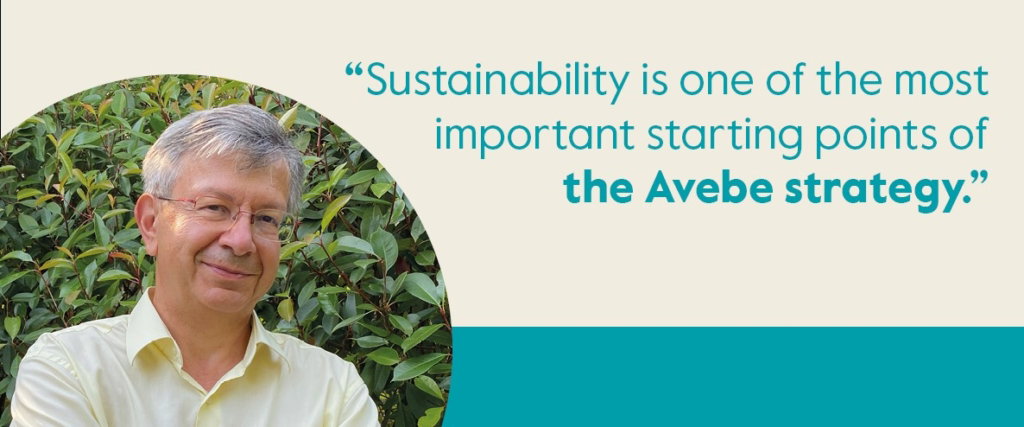
“Sustainability is an important pillar of the Avebe strategy and is also to Saint-Gobain, one of our key customers in the industrial sector and world leader in building materials such as mortars and coatings. Sustainability has been a pillar of their industrial and commercial strategy for several years. Saint-Gobain invests heavily in sustainable development and this also determines the company’s strategic choices. Today we see others following them in this direction and Avebe making the right choices to meet their demand. In the materiality analysis of Avebe we describe the relevant economic, social and environmental aspects that influence the results of our organization. This analysis appeals to Saint-Gobain, in particular our ability to innovate, our customer focus and our policy to reduce the impact of our activities. All this fits perfectly with the materiality analysis of Saint-Gobain, in which the preservation of biodiversity is a spearhead. This includes saving and reducing energy consumption and, more generally, resources.”
Is it difficult to meet the demands of these customers?
“On the contrary! The natural raw material we work with, the starch potato, aligns perfectly with a sustainable strategy because the raw material itself is sustainable. Potatoes absorb CO2 from the atmosphere as they grow. Sustainability is one of the key principles of Avebe’s strategy and this is a good thing for customers who want to differentiate themselves. We are a major player in the field of sustainability, not least owing to our focus on the availability of renewable raw materials and recycling options.”
Hubert Jannin, Technical Commercial Manager
What challenges does your team face?
“The main raw materials come from the Netherlands. One challenge is the long-term availability of raw materials. The Dutch production of starch potatoes has a limit in terms of surface area. Another point of attention is transport. The challenge is to compensate for this and find a means of transport that is carbon neutral, as we do with the train. The building materials industry is characterised by strong demand for advanced products. Long-term demand is determined by the business choices our customers make and the segments in which they invest the most.”
What are Avebe’s priorities?
“Our priority is to focus on the short term. For building material applications, our products are particularly effective: a very low dosage yields great performance and we can usually produce over a thousand tonnes of mortar (grout) with one tonne of our products. For about six years, we have been working closely with Saint-Gobain to find new applications for our products. Since last spring, however, we have been experiencing special circumstances: there is a shortage of almost all building materials, such as wood and metal. Demand from China plays an important role in this respect. The corona crisis has created a global shortage of supplies for almost all building materials. The crisis has also created a huge demand at DIY stores. At the moment, our priority is to maintain our level of sales in a market characterised by scarcity.
We are close to our customers and listen carefully to them. We operate around the world with growth opportunities that continue to be very significant in regions such as Southeast Asia, Africa and Latin America. Our technical orientation is essential to present our products and to answer specific questions and developments in these countries. By working together with our clients, we raise commercial development to a higher level.”
What else characterises the industrial market?
“I find it reassuring to see that companies are investing in sustainability, that they understand that sustainable production is essential. Those who do not understand how important this is do not understand the world we live in. We have no choice if we care about the well-being of future generations. Sustainability is the future and I am really proud to be working for Avebe, precisely because it is a company that invests in sustainable business processes. Avebe has a good reputation when it comes to quality, reliability and stability. Our customers have confidence in us and this is reinforced by the fact that we are a cooperative. The cooperative is characterised by control, distribution among members and reuse of resources for its purposes.That is in contrast to listed companies where the short-term financial interest is often paramount.”
This interview was published in the Avebe Magazine, July 2021